
Ten Years Waiting, Ten Minutes Walking: One Army Veteran's Return to His Feet
In 2005, during Operation Iraqi Freedom, Army veteran Richard "Richie" Neider of Phoenix sustained a spinal cord injury in an IED explosion. For years afterward he kept partial mobility, until scar tissue complications in 2013 left him fully wheelchair-bound.
According to reporting by Newsweek and Phoenix's 12News, Neider spent roughly the next decade adjusting to life without the ability to walk — the kind of quiet, permanent-feeling adjustment that so many veterans with spinal cord injuries are told to simply accept.
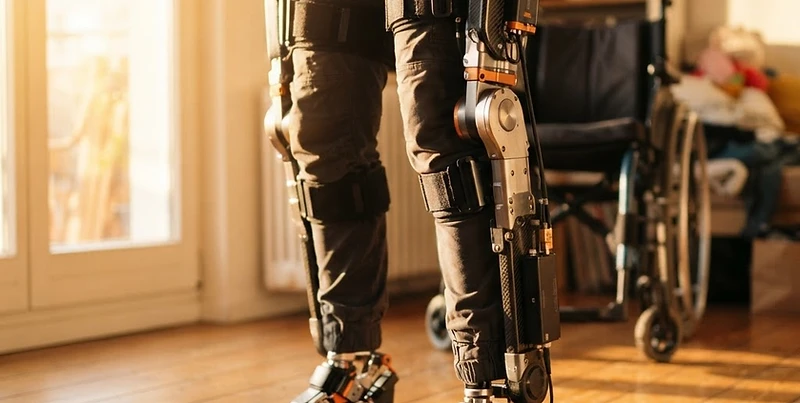
Then came the ReWalk Personal 6.0 Exoskeleton. Over two months of training at Touchstone Rehabilitation, Neider learned to use the battery-operated device, which straps to the lower back with braces at the knees and ankles, to stand and walk under his own control for the first time in nearly ten years.
'Now I'm the stand-up guy,' Neider told 12News. 'After ten years of not walking, it's one of the most amazing feelings.'
It's worth sitting with the ordinariness of what that feeling actually restores. Research on spinal cord injury consistently shows the mental health toll of losing mobility is severe — by some estimates, roughly half of people with spinal cord injuries experience mental health struggles as a result. What Neider describes isn't a miracle cure. It's something more specific and, in its way, more powerful: the return of eye-level conversation, of standing at a counter, of a decade-old routine his body had quietly stopped being able to perform.
Neider's injury happened in a warzone. His decade of waiting happened at home, in a wheelchair, doing the ordinary work of adjusting to a body that no longer matched the life he'd planned. That gap — between what the technology could already do and how long it took to reach him — is the exact gap Walk For A Hero exists to close, one funded exoskeleton at a time.
Sources: Newsweek, "Arizona Veteran Paralyzed in Iraq Walks in Exoskeleton: 'Amazing Feeling'"; 12News, "Valley veteran can walk again by using exoskeleton technology."
Comments
About the Author
Reporting and editorial content from the Walk For A Hero team, working directly with founder Glenn Baker and the veterans and families involved in the mission.
The Journal
Continue Reading


22 A Day: The Truth Behind America's Most Repeated Veteran Suicide Statistic
For over a decade, '22 a day' has been the number everyone quotes. Here's where it actually came from, what the newest VA data says instead, and where to get help right now.


12 Years After Paralysis, an Air Force Veteran Is Standing Again
Twelve years after paralysis, an Air Force veteran paired exoskeleton training with neuromodulation therapy — and saw real gains in movement, endurance, and function most had written off as permanently gone.


Why a Walk-A-Thon? The Fundraising Model Behind Walk For A Hero
This isn't a gala, and it isn't a one-click donation button. Here's why Walk For A Hero asks people to actually walk — and how that choice changes what a dollar raised actually means.