
Joshua's Journey: How One Veteran's Story Became a National Movement
Joshua Holm came home from Iraq paralyzed. A fellow veteran refused to accept "someday." The story behind Walk For A Hero's first campaign.


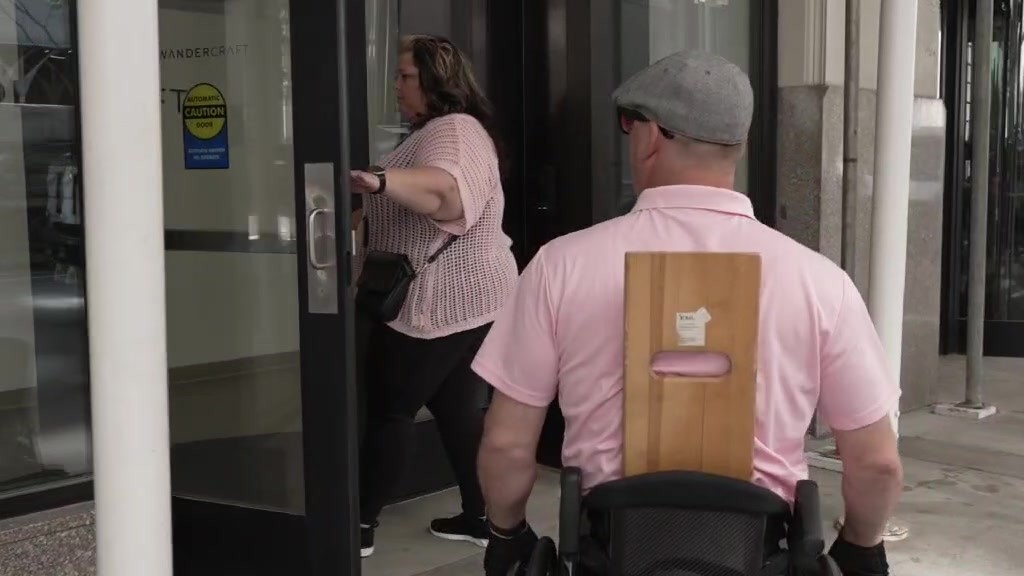
Joshua L. Holm rolled up to the glass doors of Walk In New York in a pink polo shirt and a gray flat cap, a wooden transfer board tucked behind the back of his wheelchair. A woman held the door. The Wandercraft name was printed on the glass.
Inside, a self-balancing exoskeleton was waiting for him. Before the session was over, the veteran who had been paralyzed by combat-related injuries in Iraq would be upright and walking across the clinic floor.
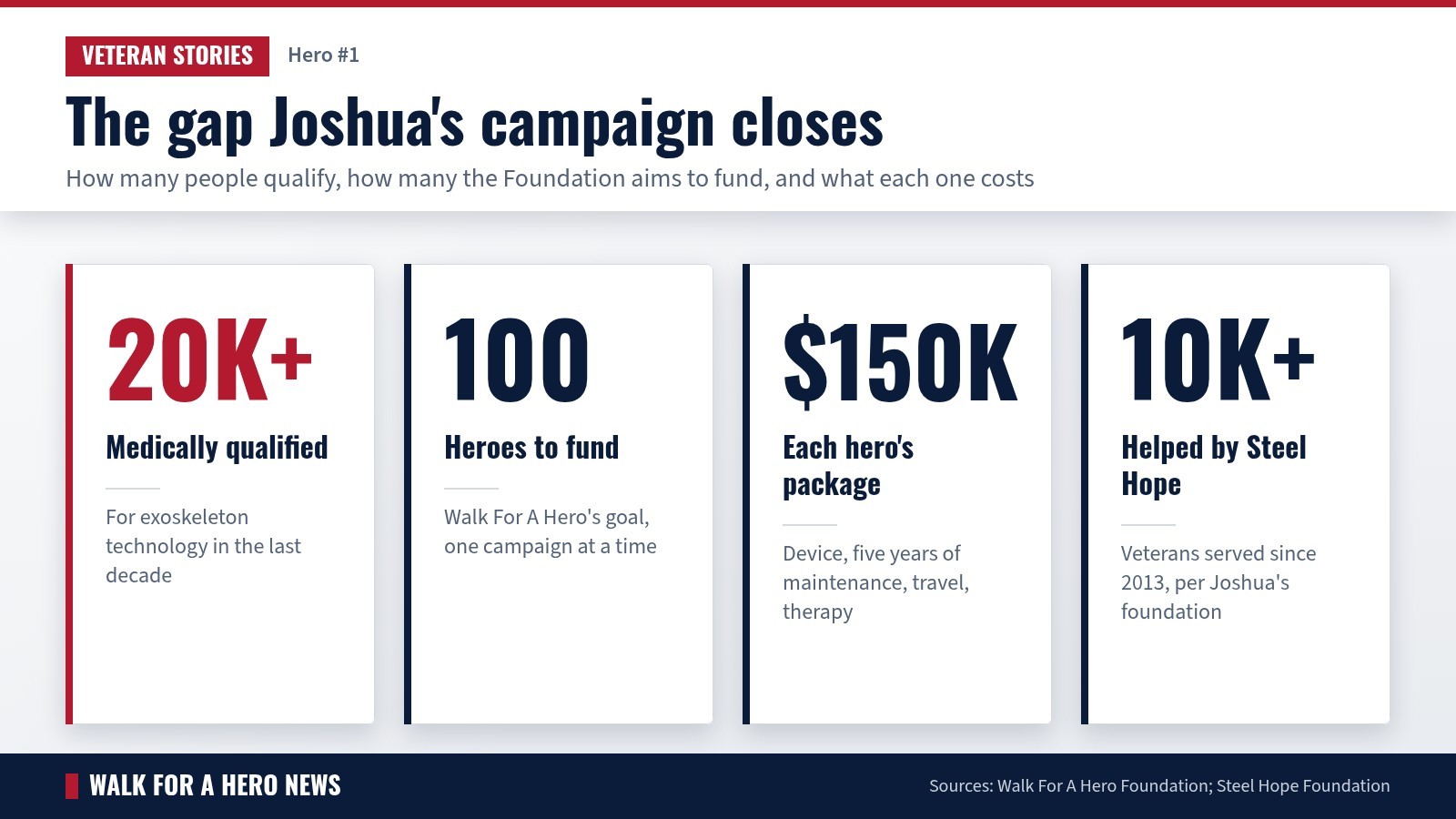
That session was a test drive, not a finish line. Joshua does not own an exoskeleton. Walk For A Hero Foundation, the nonprofit built around his story, is raising the money to buy him his own, and he is the first of approximately 100 veterans the Foundation intends to fund.
This is how one veteran's story, and one fellow soldier's refusal to accept "someday," turned into a national campaign that asks ordinary Americans to walk.
A tour in Iraq, and the life that came after
Joshua deployed to Iraq in 2003 and served through 2004. During that deployment he sustained combat-related injuries that left him paralyzed and living with traumatic brain injury.
His own website puts it simply: "Joshua's injuries confined him to a wheelchair." It describes him as "someone living with Traumatic Brain Injury."
What he built instead is the part of the story that tends to surprise people. According to his website, Joshua is "a professional speaker, ordained minister, author, life coach, and combat veteran." He books keynotes, workshops and seminars, and a testimonial on his site from a pastor at Hope Church recommends him to churches and youth programs.
He has written two books about his struggles and the hope he found in them. The site notes that "Joshua has given many copies of his books away to warriors in aspiration of bringing hope to them."
The same site marks January 16, 2003, as a pivotal moment, the day he chose to embrace faith.
He is a member of Paralyzed Veterans of America. For rough ground, he uses a TrackChair, a tracked all-terrain wheelchair.
Steel Hope and the "BE STEEL" creed
Joshua also founded Steel Hope Foundation, a 501(c)(3) nonprofit that describes itself as "dedicated to helping others." Its stated mission is to equip people to live by a seven-word creed.
The acronym is the heart of it: Believe, Expand, Stand, Transform, Encourage, Enlighten, and Love. Steel Hope's humanitarian work has reached as far as Nigeria, and Joshua's website includes photos of him there.
Steel Hope says it has helped more than 10,000 veterans since 2013, through programs that include a Retired Flag Project and Hero Banner. The foundation's homepage opens with a single line attributed to its founder.
Individuals go to combat, communities go to war.
Joshua L. Holm, Steel Hope Foundation
Those seven words could serve as the thesis for Walk For A Hero. The campaign that now carries his name is built on the idea that a community can do together what one wounded veteran cannot do alone.
A technology that already existed
The gap Joshua faced was not a gap in science. Powered exoskeletons have been in American clinics for more than a decade, and the Department of Veterans Affairs has studied them closely.
In December 2015, the VA agreed to pay for a powered exoskeleton for eligible paralyzed veterans, The Associated Press reported. Dr. Ann Spungen, who led VA research on that device, called it "a historic move on the part of the VA because it represents a paradigm shift in the approach to rehabilitation for persons with paralysis."
That same AP report described Gene Laureano, a former Army corporal paralyzed in a fall from a ladder, remembering the first time he tried the device at the James J. Peters VA Medical Center in the Bronx. "I hadn't spoken to somebody standing up in so long," Laureano said.
The Bronx VA has remained part of the work. Wandercraft says clinical trials led by the James J. Peters VA Medical Center and Kessler Foundation, along with a separate study at Walk In New York, supported the FDA clearance of its personal exoskeleton in 2026.
Over 20,000 people have medically qualified for exoskeleton technology in the last decade. The distance between qualifying and owning one is where veterans like Joshua have been left waiting.
The filmmaker who would not wait
Glenn Baker is a U.S. Army veteran of Desert Storm. He came home, built businesses and a career as a country music artist, and kept carrying what he had seen overseas.
That weight became a song, and then a documentary, Finish This Fight: Diary of a Pissed Off American Soldier. Glenn has described the project in interviews, including a November 2025 conversation on the Flourish-Meant podcast, as part of a broader effort to help injured veterans.
While making the film, Glenn met Joshua.
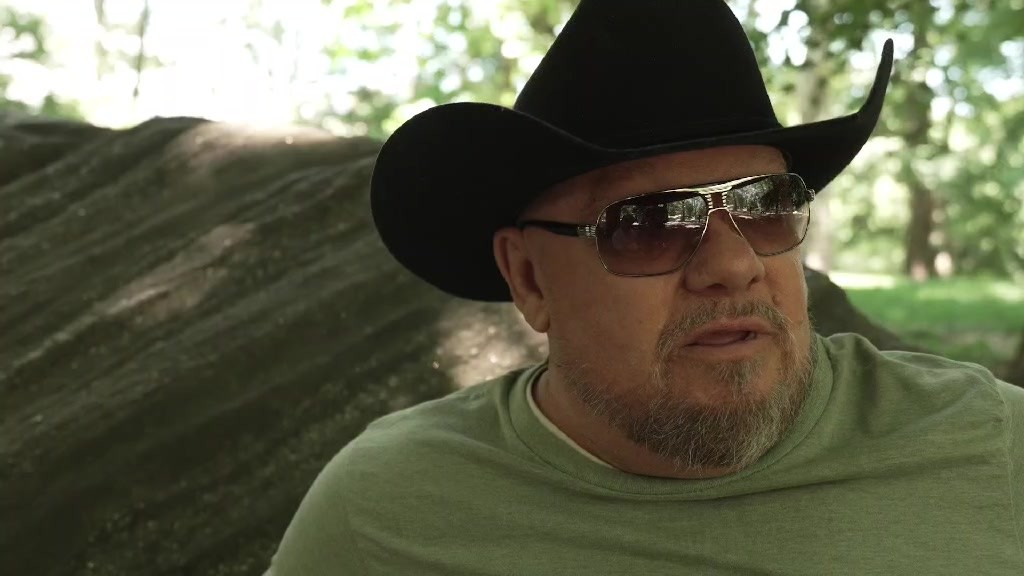
Joshua had medically qualified for an exoskeleton, a Wandercraft device that could let him stand and walk. He did not have one. In the words of the Foundation's own account, "The system told him someday, maybe."
Glenn decided that answer was not good enough. The Foundation's summary of his decision is three words long: not someday, now.
He put the reasoning in terms any soldier would recognize.
As a soldier, we made an oath to defend and protect the Constitution of the United States against all enemies, foreign and domestic. As a Warfighter, we also made an oath to our battle buddies to never leave anybody behind. We have left Warriors behind, and this mission is to fix that and get those Warriors back on their feet.
Glenn Baker, founder, Walk For A Hero
Walk For A Hero Foundation is a fully independent 501(c)(3). Joshua became its first hero, and his campaign became its anchor.
Inside the session at Walk In New York
Walk In New York is Wandercraft's flagship U.S. walk center, a bright therapy space with a dark accent wall, treatment tables and the company's logo on display. It is where Walk For A Hero's cameras followed Joshua for his session.
The footage shows him first in his wheelchair, sitting beside the exoskeleton while a clinician prepared it. The device hung from an overhead support, its black frame, straps and leg sections ready to be fitted.
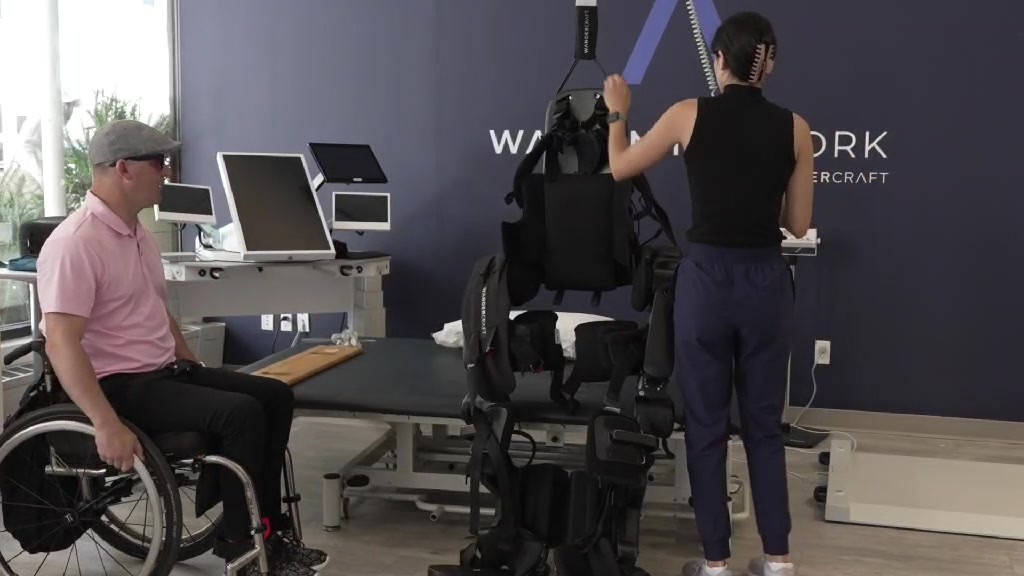
Then the footage shows him standing. Strapped into the exoskeleton, still in the pink polo and flat cap, Joshua walks across the clinic floor with his arms at his sides.
A clinician stays close behind him. A man in a navy polo films on his phone. Others watch from chairs along the window, some holding up phones of their own.
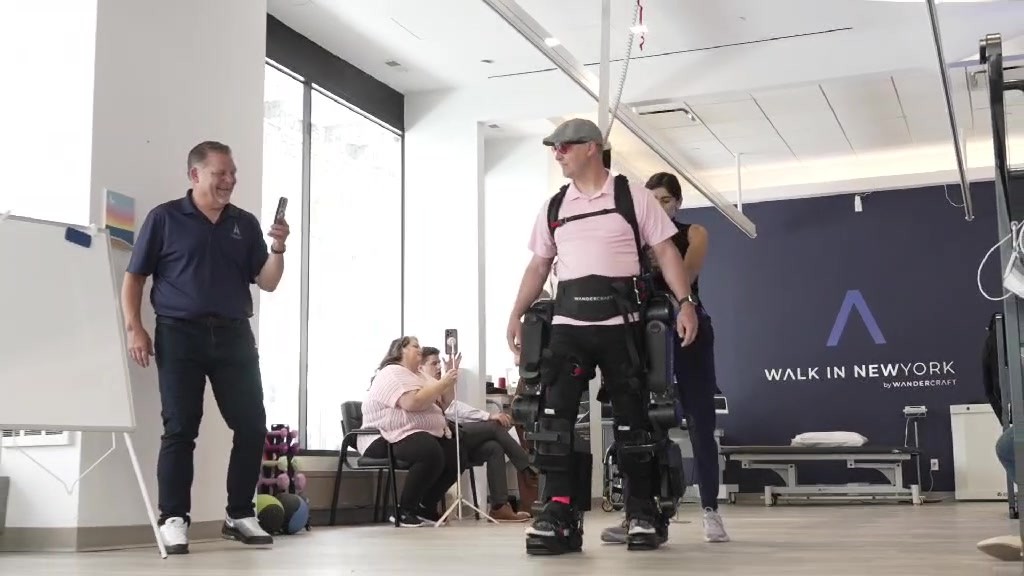
The device he used is self-balancing. It holds the wearer upright on its own, so there are no crutches and the hands are free. That design is what separates Wandercraft from earlier exoskeletons that required crutches for stability.
Wandercraft's personal-use model, Eve, received FDA clearance through the 510(k) process in August 2026, for adults with spinal cord injury at any level, used at home with a trained companion, according to the company's announcement. Wandercraft describes Eve as designed "to complement, not replace, the wheelchair."
A session in a clinic shows what is possible. A device of his own, at home, is what the campaign is for.
From one veteran to a national campaign
The cost is the obstacle. Walk For A Hero's full package for each hero is $150,000, covering the exoskeleton, five years of maintenance, travel for fitting and training, and physical therapy.
That number is out of reach for most veterans and families. Glenn's answer was to spread it across a country full of people who can walk.
The model is simple. A walker commits to 15 miles, at their own pace, wherever they live. Their phone records the miles by GPS. Friends and family back the walk by pledging $1 to $100 per mile, and cards are charged only when the walker finishes all 15 miles.
Ten backers at $5 a mile raise $750 on a single walk. Two hundred walks like that fund one $150,000 package. Every dollar designated to a hero's campaign funds that hero's package.
Joshua's campaign has a public hero page with live progress, so walkers and backers can watch the total move. Walkers choose him as their hero, and every completed walk adds to his number.
That is what makes the effort national. A walker does not need to live in New York, know Joshua personally, or join an organized event. A neighborhood loop in Ohio and a park path in Texas count the same, as long as the GPS records 15 miles.
When his package is funded, the next verified veteran's campaign opens, and the same walkers can start again for someone new.
Why one name matters
Large numbers are easy to scroll past. A man in a pink polo shirt, rolling through a clinic door and then walking out of a wheelchair for the length of a session, is not.
That is the logic of starting with Joshua. He is a real veteran with a real record of service, a public life of ministry and speaking, and a foundation of his own built on helping others stand.
His creed says communities go to war. Walk For A Hero is asking a community to finish the fight, 15 miles at a time, until Joshua has an exoskeleton of his own.
The country sent Joshua Holm to war. The people walking for him are trying to bring him the rest of the way home.
The First Step explains why the Foundation put one name first, and Why a Walk-A-Thon? lays out the fundraising model behind it.
Sources
- Joshua L. Holm: The Man of Steel (official website)
- Steel Hope Foundation (official website)
- Walk For A Hero Foundation: About
- Flourish-Meant with Tina Yeager: Lifechanging Support for Veterans with Glenn Baker (November 11, 2025)
- Wandercraft: Wandercraft Receives FDA Clearance for Eve (August 11, 2026)
- Military Times (AP): VA to provide robotic legs to paralyzed vets (December 17, 2015)
- FDA 510(k) database: K260381, Eve
Did this story matter to you?
Walk For A Hero News
Reporting from the Walk For A Hero Foundation on paralyzed veterans, exoskeleton technology, and the people walking to fund it. Have a correction or a story we should cover? Contact the newsroom.


Comments
Be the first to share your thoughts.